


No litter ad will tell you this, but your cat gets a veto. You can buy the bag with the prettiest label and the boldest odor promise, and if your cat does not like the feel of it under their paws or the smell of it in their nose, they will tell you by going somewhere else. That is the real test of a cat litter. Not the marketing on the front, but whether your cat keeps walking back to the box and squatting like it is no big deal.
And cats are surprisingly consistent about what they like. Surveys of feline preference keep landing in the same place: most cats prefer an unscented, clumping litter with a fine, sandy texture, in a box they can stand in without bumping the walls (ASPCA). So this PawProof guide skips the perfume and the gimmicks and sorts by job. Find your situation below, then read the switching section, because the cleanest litter on earth does nothing if your cat refuses to set foot in it.
I weighed four things, starting with the one your cat decides. Acceptance first: does it match what cats reliably gravitate toward, which is unscented, clumping, and fine textured (ASPCA). Then safety: low enough dust for sensitive lungs, and the right type for a household with kittens, since clumping clay carries a real caution for the very young (Cornell Feline Health Center). Then odor and clumping performance, because a litter that clumps poorly turns daily scooping into a chore you will skip. And finally honest cost, priced per the bag and not the autoship coupon. Every pick names a real product with its real type. No invented dust percentages, no made-up specs.
The litters worth buying
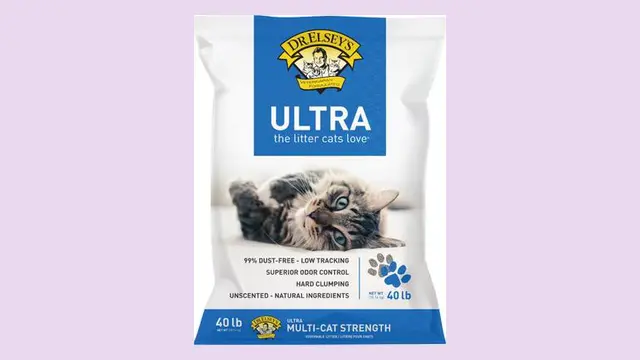
Dr. Elsey's Ultra Unscented Clumping Clay
About $15 to $25
This is the litter that lines up almost perfectly with what cats reliably choose: unscented, clumping, and a fine, sandy grain that paws seem to accept without complaint (ASPCA). The clumps set up hard enough to scoop in one piece, which keeps the box clean with less digging on your part. The honest downside is weight and dust: it is heavy clay, so the big bag is a workout, and even a low-dust clay kicks up some powder when you pour, so steady the bag and let it settle before your cat hops in.
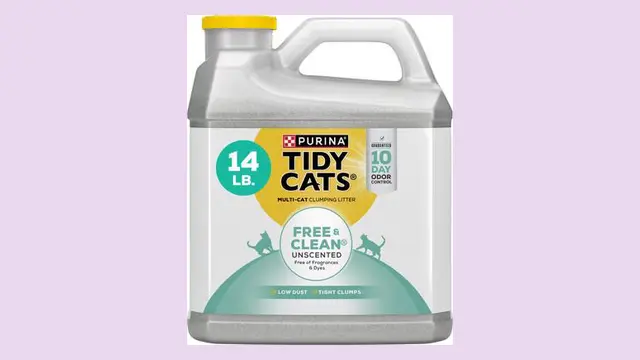
Purina Tidy Cats Free & Clean Unscented
About $14 to $22
Several cats means several deposits a day, and that is where odor and dust both get tested. This one pairs clumping clay with activated charcoal for odor and skips the fragrance and dyes, which suits a multi-cat box where you cannot afford a litter that any one cat rejects. It is sold as low dust, which is a fair claim for clay, but low dust is not no dust, and a busy multi-cat box still needs scooping at least once a day to keep the smell honest. Remember the box math too: one box per cat plus one extra (ASPCA).
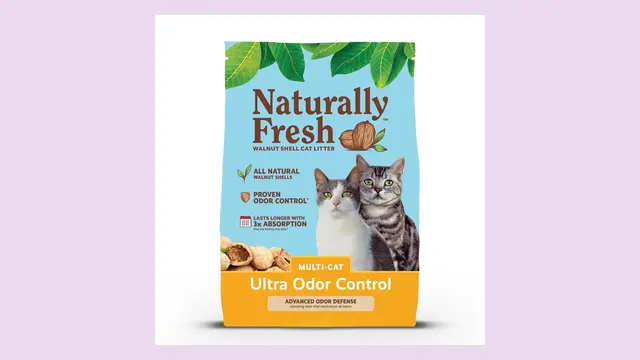
Naturally Fresh Walnut Clumping
About $12 to $25
Made from crushed walnut shells instead of clay, this one is the surprise on the list for smell. Walnut is naturally absorbent and clumps fast, and it tends to hold odor down without leaning on added perfume, which is the trade most scented litters make. Two honest caveats: the dark walnut grains track and show up on light floors more than pale clay does, and the natural nutty scent is faint but real, so a cat that wants truly zero smell may notice it. Scoop daily and it earns its keep.
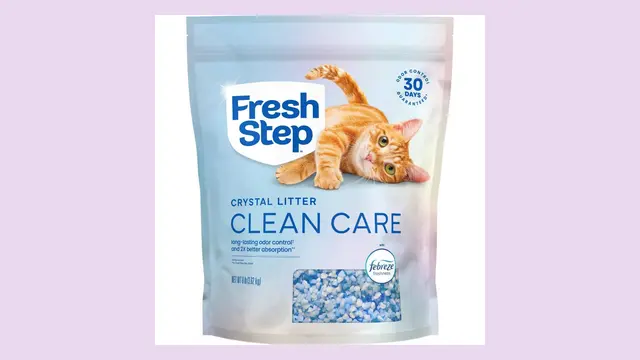
Fresh Step Crystals (Silica Gel)
About $10 to $18
If dust is your real problem, whether for an asthmatic cat or your own lungs, silica gel crystals are the cleanest pour on this list. They are lightweight, very low dust, and absorb urine rather than clumping it, so you stir instead of scoop and replace the whole tray on a schedule. The downsides are specific: some cats dislike the crunch of crystals underfoot and will tell you, and because the crystals do not clump, you cannot lift out urine, so the tray needs a full change roughly weekly. Worth a test bag before you commit a picky cat.
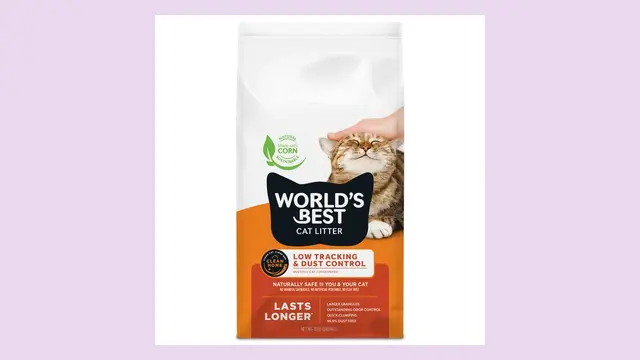
World's Best Cat Litter (Corn)
About $20 to $38
Made from whole-kernel corn, this clumps tightly, weighs far less than clay, and is marketed as flushable in small amounts on standard sewer lines. The clumping and the lighter bag are genuinely nice. The flushable claim is where I have to be the buzzkill: the CDC warns against flushing cat waste because the Toxoplasma parasite can survive treatment and harm marine wildlife, and California requires litter sold there to carry a do-not-flush message (CDC). Buy it for the clumping and the corn, not the toilet. Bag the waste instead.
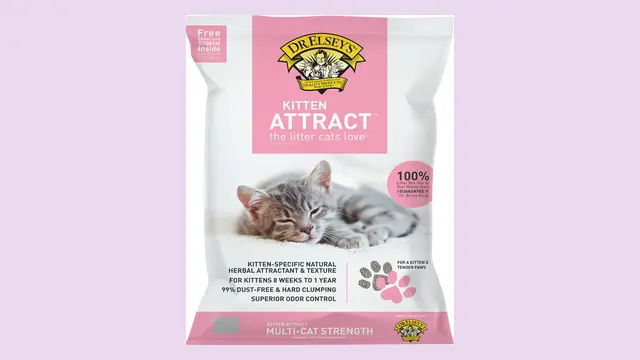
Dr. Elsey's Kitten Attract
About $16 to $24
Kittens are the one case where you cannot just default to standard clumping clay, because very young kittens explore the world with their mouths and sometimes eat litter, and clumping clay swells in the stomach if swallowed (Cornell Feline Health Center). This litter uses a fine grain and a natural attractant to draw kittens to the box, which helps training stick. The honest catch is the caution itself: until your kitten reliably stops mouthing the litter, many vets prefer a non-clumping or plant-based litter, so confirm the timing with your own vet rather than the bag.
| Litter | Type | Best for | Scent | Approx price |
|---|---|---|---|---|
| Dr. Elsey's Ultra | Clumping clay | Overall, multi-cat | Unscented | $15 to $25 |
| Tidy Cats Free & Clean | Clay + charcoal | Multi-cat odor | Unscented | $14 to $22 |
| Naturally Fresh Walnut | Walnut shell | Odor control | Faint natural | $12 to $25 |
| Fresh Step Crystals | Silica gel | Low dust | Light or unscented | $10 to $18 |
| World's Best (Corn) | Corn | Natural, lightweight | Unscented option | $20 to $38 |
| Dr. Elsey's Kitten Attract | Clumping clay | Kittens, training | Attractant | $16 to $24 |
How to switch without a protest
Cats are creatures of habit, and the litter box is where habit matters most. If you found a litter your cat accepts, the smartest move is often to leave it alone. When you do need to switch, do it slowly: mix a little of the new litter into the old over a week or so, raising the ratio each day, so your cat barely notices the change. A hard overnight swap is the fastest way to get a vote of no confidence delivered to your bath mat.
Get the basics right and the brand matters less than you think. Most cats want a fairly shallow, even bed of litter, somewhere in the range of about one to three inches, with the ASPCA leaning shallower and VCA leaning a touch deeper, so start near two inches and adjust to what your cat digs in (ASPCA). Keep the box in a quiet but not cornered spot, skip the heavily perfumed liners and covers that many cats dislike, and scoop daily. One more reason to scoop every day if anyone in your home is pregnant or immune compromised: the Toxoplasma parasite in cat feces does not become infectious for one to five days, so daily removal lowers the risk (CDC). Tip: keep a small jug of your current litter in reserve so a sudden out-of-stock bag never forces a cold switch.
Best litter by situation
There is no single bag that wins every home, so buy to your situation. For a typical adult cat, start with Dr. Elsey's Ultra unscented clumping clay, because it matches what cats reliably accept (ASPCA). Running a multi-cat box, reach for Tidy Cats Free & Clean and respect the one-per-cat-plus-one box rule. Fighting odor without piling on perfume, try Naturally Fresh Walnut. Worried about dust for a wheezy cat or your own lungs, go with Fresh Step Crystals. Want a lighter, plant-based bag, pick World's Best corn litter, and bag the waste rather than flushing it (CDC). And with kittens in the house, hold off on plain clumping clay and ask your vet about timing before you switch (Cornell Feline Health Center).
Litter questions worth asking
Use caution with very young kittens. Clumping clay relies on sodium bentonite, which swells dramatically when it absorbs water, and a kitten that eats litter while exploring could in theory develop a stomach or intestinal blockage (Cornell Feline Health Center). Older cats are far lower risk because they do not usually eat litter. The practical move is to start kittens on a non-clumping or plant-based litter, or a kitten-specific product, and ask your own vet when it is fine to switch to standard clumping clay rather than relying on the age printed on a bag.
On average, yes. The ASPCA reports that most cats prefer clumping, unscented litter with a medium-to-fine texture, and recommends skipping scented litter (ASPCA). The perfume in scented litter is added for human noses, and a strong fragrance can actually push some cats away from the box. Cats are individuals, so a few will not care, but if your cat is avoiding the box, switching to plain unscented litter is one of the cheapest first things to try.
Heavy dust is worth avoiding, especially around asthma. Clay litters can throw a fine dust when poured and scratched, and breathing a lot of it is an irritant for sensitive cats and people, so a cat with a known respiratory condition does better on a very low-dust option like silica gel crystals or a low-dust formula. Note that the amorphous silica gel used in crystal litter is not the same as the crystalline silica that carries occupational lung warnings, and standard silica gel litter is considered non-toxic when used as intended. If your cat coughs or wheezes, talk to your vet rather than guessing.
Better not to, even when the bag says you can. The CDC warns against flushing cat waste because the Toxoplasma parasite can survive water treatment and end up harming marine wildlife, and California requires cat litter sold there to carry a do-not-flush message (CDC). Flushing can also clog older pipes and is rough on septic systems. Treat flushable as a clumping and lightweight selling point, then scoop the waste into a bag and put it in the trash.
One box per cat, plus one extra. With three cats you want four boxes (ASPCA). Spread them out rather than lining them up in one room, put at least one on each floor of a multi-level home, and keep them in quiet but not cornered spots so a cat is never trapped while using one. More boxes also means less competition and fewer accidents in a multi-cat household, and it cuts how fast any single box gets foul.