


A teething puppy is going to chew. Adult teeth start pushing in from around three to six months of age, the gums ache, and a pup gnaws to relieve them, so the question is never whether your puppy chews but whether it aims that instinct at a toy or at your baseboards (AKC). A puppy toy also has to clear a lower bar than an adult one. It has to be soft enough for fragile milk teeth, small enough for a little mouth to carry, and sturdy enough to survive a pup who tests the whole world with its teeth.
So this list is built for that stage and sorts by chew style rather than looks, which makes it deliberately different from our wider best dog toys guide for grown dogs and power chewers. A teething puppy needs softer materials, and it needs you to know which toys are safe to leave in a crate and which come out only when you are watching. Find your pup's habit below, then read the two safety sections, because with a puppy a chew's hardness and a ball's size decide safety long before the label does.
Each pick had to clear the puppy bar, not the adult one. Kind to milk teeth: soft enough to pass the hardness check below, since a puppy's baby teeth crack even more easily than the adult set behind them (VCA). Too big to swallow: sized for a small mouth now, with room to move up as the pup grows (AKC). A real job: it should soothe sore gums, work a young brain, or build a game with you, not just fill the toy bin. And washable, because a puppy coats a toy in saliva and stuffing within a day. Every pick names a real category example with the maker's own specs, no numbers PawProof invented, at rough US retail for mid-2026. For what to pack inside a stuffable toy, see our guide to healthy dog treats.
Five toys, sorted by how your puppy plays
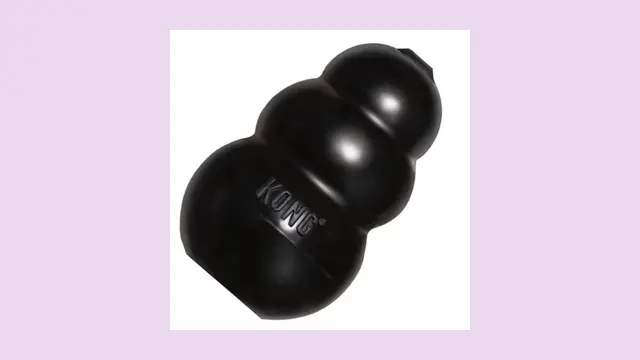
KONG Puppy
About $8 to $16
The stuffable rubber toy that does the most for a teething puppy. KONG makes the puppy version, the light blue or pink one, from a softer rubber than the red Classic, formulated to go easy on erupting milk teeth while a pup still gets to gnaw. The win is the hollow center: pack it with your puppy's kibble or a thin smear of xylitol-free peanut butter, since xylitol is toxic to dogs (ASPCA), then freeze it overnight so the cold rubber soothes sore gums while the food keeps a bored pup busy through crate time. It is one of the few toys sturdy enough to leave with a loosely supervised puppy. Size up as adult teeth come in, count the stuffing toward the day's food, and swap it out once the rubber splits.
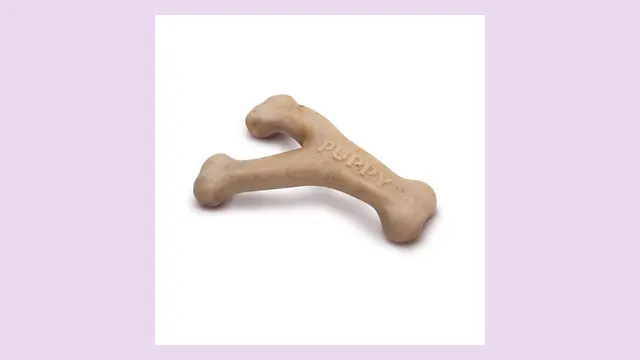
Benebone Puppy Wishbone
About $7 to $11
A puppy who needs to gnaw will find a target whether you provide one or not, and a chew stick built for milk teeth beats a table leg. The puppy Wishbone uses a softer nylon than the adult version and is flavored all the way through rather than sprayed on the surface, so it keeps a pup coming back. The curved shape lets small paws pin it while the pup works one end. It is non-edible, so treat this as a supervised chew: pick the size rated for your puppy's weight and retire it the moment the ends wear down to a gulpable nub. A softer puppy Nylabone does the same job if your pup prefers a straight bone.
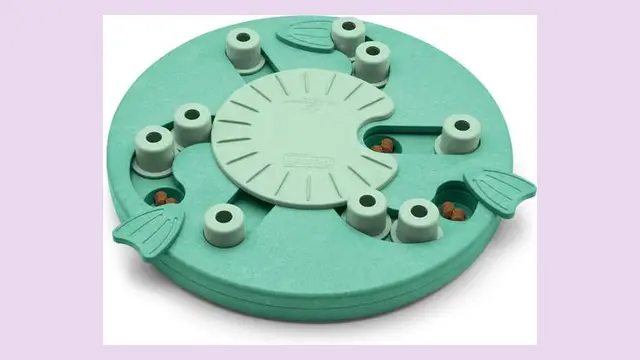
Outward Hound Nina Ottosson puzzle (Level 1)
About $10 to $22
Half of puppy chewing is plain boredom, and a food puzzle turns that restless energy into a task. Start a puppy on a Level 1 slider or flip-board, the simplest in the range, and let the pup nose and paw kibble out of the compartments. It tires a young brain faster than another lap of the yard and buys you a quiet ten minutes. The catch is in the maker's own instructions: this is a supervised toy, because the plastic pieces are not built to be chewed or swallowed. Bring it out for a session, then put it away, and move up a difficulty level only once the current one is easy. A snuffle mat or a silicone lick mat does the same enrichment job and rinses clean.
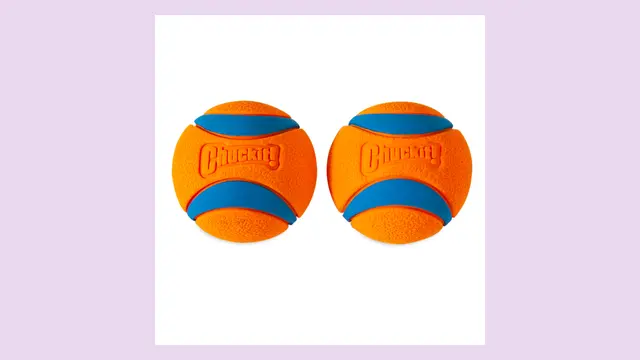
Right-sized rubber ball (Chuckit! Ultra Ball, small)
About $5 to $12
Fetch teaches a puppy to bring things back to you, a habit that pays off for the next decade of walks. A solid, high-bounce rubber ball in a size your puppy clearly cannot fit fully in its mouth is all you need, and the small Chuckit! Ultra Ball is a durable, washable example that also floats. Keep two rules straight. First, a ball is a fetch toy, not a chew toy, so do not leave a pup alone to gnaw one down to swallowable pieces. Second, size beats everything: a ball that fits behind the back teeth is a choking risk, so err large and move up as your puppy grows. Skip fuzzy tennis balls as a daily toy, since the abrasive fuzz wears on young teeth.
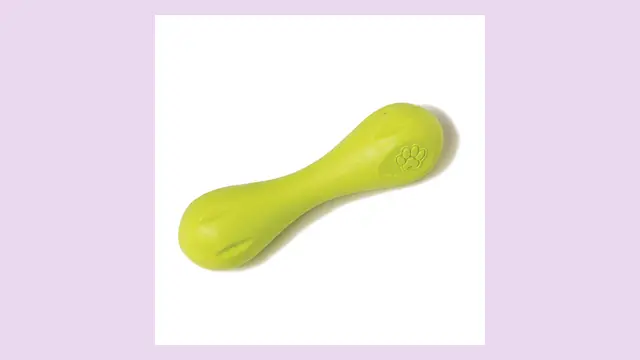
West Paw Zogoflex (Toppl or Hurley)
About $13 to $20
For the pup who would rather play with you than chew alone, a soft, grippy rubber toy covers tug, fetch, and a little gnawing in one. West Paw's Zogoflex is BPA-free and phthalate-free, floats, and goes on the top rack of the dishwasher, which matters once a puppy has coated everything in saliva and peanut butter. The Toppl works as a gentler stuffable for enrichment, while the bone-shaped Hurley suits tug and fetch. Keep tug low and gentle with a teething puppy to protect loose milk teeth and the adult teeth setting in behind them, and let your pup win sometimes so the game stays fun. West Paw replaces the toy once if a dog damages it, though you still supervise tug either way.
| Toy | Chew style | Solo or supervised | Cleaning | Approx price |
|---|---|---|---|---|
| KONG Puppy | Stuffable teether | Safe to leave, check often | Dishwasher or boil | $8 to $16 |
| Benebone Puppy Wishbone | Nylon chew stick | Supervised | Scrub and rinse | $7 to $11 |
| Outward Hound puzzle | Food puzzle | Supervised only | Wipe or hand-wash | $10 to $22 |
| Chuckit! Ultra Ball, small | Fetch ball | Supervised fetch | Rinse, washable | $5 to $12 |
| West Paw Zogoflex | Tug and all-round | Supervised | Dishwasher safe | $13 to $20 |
Which toys you can leave, and which need you in the room
The most useful way to sort puppy toys is by how much supervision each one needs. A short list is safe to leave with a pup who is only loosely watched in a crate or pen: a sturdy stuffable rubber toy like the KONG Puppy and a correctly sized puppy chew are the main two, because there is nothing small to break off once you size them right. Even these earn a glance now and then, since a determined pup and enough time will wear any toy down.
Everything else is a supervised toy, out for a session and away afterward. Puzzles carry plastic pieces a pup should not eat. Plush and squeaky toys are fine for gentle play, but a puppy that shreds one can swallow the stuffing or the squeaker, so a ripped plush comes out of rotation at once. Rope and tug toys are the sharpest example: as the rope frays, swallowed strands can bunch the gut into what vets call a linear foreign body, which can mean surgery (VCA), so keep rope for supervised tug and put it away after. Fetch balls come out for the game and go back in the bin. Watching your pup play is also how you learn to read its body language, and a shared toy makes early socialization easier when you use it to make new people and places feel good.
How hard is too hard, and the sizes that choke
Two quick tests keep a puppy toy out of the vet's office. The first is hardness. Vets use a simple rule of thumb: if you cannot dent the surface with your thumbnail, or would not want the object swung against your own kneecap, it is too hard and can fracture a tooth (VCA). That rules out antlers, real bones, hooves, ice cubes, and the hardest adult nylon chews, and it matters double for a puppy, whose milk teeth are thinner than the adult set pushing in behind them. Softer puppy-grade nylon, softer rubber, and rubber-cored toys pass; anything marketed as "indestructible" usually does not. Chewing does scrape a little plaque, but it is no substitute for brushing your dog's teeth, a habit worth starting now while your pup is young enough to accept it.
The second test is size. A toy has to be too big for your puppy to fit fully in its mouth, because a toy or ball small enough to swallow is a choking risk (AKC). Puppy-labeled toys are cut for little mouths, but puppies grow fast, so re-check the fit every few weeks and size up before a toy shrinks behind the back teeth, and retire any chew once it wears small enough to gulp. Then there is cleaning, which owners skip and puppies punish, because mouths, food stuffing, and floor grime turn a toy into a bacterial film within days. Choose rubber and nylon you can run through the dishwasher or scald in boiling water, silicone lick mats and puzzles that wipe or rinse clean, and plush that goes in the wash. A toy you cannot clean is a toy to skip. If a puppy does swallow a piece or start to choke, our pet first-aid basics covers what to do while you get to a vet.
The small rotation a new pup actually needs
A puppy is happiest with a small rotation, not a single toy, and three roles cover almost everything. Start with a KONG Puppy for the hours your pup is crated or alone, a soft rubber toy you can stuff and freeze so it soothes gums and stays interesting. Add a Benebone Puppy Wishbone or softer puppy Nylabone for supervised gnawing while the adult teeth push through. Then pick one play toy for time with you: a West Paw Zogoflex for tug and fetch, or a right-sized Chuckit! Ultra Ball if your pup is ball-mad. Keep a Level 1 food puzzle or lick mat on the shelf for rainy days. Rotate them so each stays novel, size up as your puppy grows, and bin anything that splits, frays, or shrinks small enough to swallow. Buy for the habit in front of you and the toys do their job instead of piling up unused.
What new puppy owners ask
Soft, correctly sized toys made for milk teeth. A stuffable rubber toy like the KONG Puppy, a softer puppy nylon chew such as a Benebone Puppy Wishbone, and gentle tug or fetch with a rubber toy cover most of it, and freezing a stuffed rubber toy helps soothe sore gums. Avoid anything hard enough to crack a tooth and anything small enough to swallow, and keep rope and shred-prone plush for supervised play rather than solo chewing. Size up as your puppy grows and retire toys as they wear (AKC).
Use the thumbnail and kneecap tests. If you cannot make a dent with your thumbnail, or would not want the object swung against your kneecap, it is too hard and can fracture a tooth (VCA). That rules out antlers, real bones, hooves, ice, and the hardest adult nylon chews. A puppy's milk teeth are more fragile than adult teeth, so lean softer: puppy-grade nylon, softer rubber, and rubber-cored toys pass the test, while anything sold as indestructible usually fails it.
Rope needs close supervision, and rawhide is best skipped. As a rope frays, a puppy can swallow strands that bunch the intestines into a linear foreign body, which can require surgery (VCA), so use rope only for supervised tug and put it away after. Rawhide can be gulped in chunks that choke or lodge in the gut (AKC), a real risk for a puppy still learning how to chew, so reach for a softer puppy chew or a stuffable rubber toy instead.
With the right toy, yes, within limits. A sturdy stuffable rubber toy sized for your puppy is the main one safe to leave in a crate or pen, since there is nothing small to break off (AKC). Keep puzzles, plush, rope, and fetch balls for supervised sessions only. No toy is truly hands-off, so check even the safe ones for wear, and take a collar off a crated pup so a tag cannot snag on a toy or crate.
A small rotation beats a pile. Three or four toys covering a solo chew, a supervised gnaw, an enrichment puzzle, and a play toy is plenty, and rotating them keeps each one novel. Replace on damage, not on a calendar: toss a plush once it is ripped and leaking, pull any toy with an exposed squeaker, and retire a chew once the ends wear or it shrinks small enough to gulp (AKC). A quick look each week catches most problems early. Size up, too, as your puppy grows into a bigger mouth.