


A kitten is not a scaled-down adult cat, and its bowl should not be either. In its first year a kitten multiplies its birth weight many times over, laying down bone, muscle, brain, and eyes on a schedule an adult cat finished long ago. That growth runs on a richer diet: more protein to build tissue, more fat for dense calories, and more calories per cup than a grown cat needs (Merck Veterinary Manual). Feed a kitten an adult maintenance food and you are asking it to build a body on a maintenance budget.
The exact targets come from AAFCO's nutrient profiles, which set separate minimums for growth and for adult maintenance. For a kitten, crude protein has to reach at least 30% on a dry matter basis, against 26% for an adult, with fat at least 9% (AAFCO). Two nutrients matter beyond those headline numbers. Taurine, an amino acid a cat cannot make in useful amounts, has to arrive in the food, and a chronic shortage damages the heart muscle and the retina (Merck Veterinary Manual). DHA, an omega-3 from fish oil, feeds the fast wiring of a kitten's brain and vision through the early months (Cornell Feline Health Center). Both belong on a kitten label, and every food below carries them.
Two screens, both non-negotiable. First, the label has to carry an AAFCO nutritional adequacy statement for growth (or for all life stages), the only wording that certifies a food is complete for a kitten; an adult-maintenance food fails this test no matter how premium the front of the bag looks (AAFCO). Second, the maker should answer the WSAVA questions: a qualified nutritionist on staff, real quality control, and nutrient and calorie data shared on request. WSAVA rates no brands; it hands owners those questions (WSAVA). Every pick guarantees taurine and lists DHA on top of that. Those are the two screens PawProof will not waive for any bag, whatever the marketing on the front promises. Read it as a starting shortlist rather than a prescription, because a kitten with any health flag still gets whatever its veterinarian decides.
Five kitten foods, sorted by the growth job
One food for each stage of a kitten's first year, from the everyday dry bag to the first gruel a four-week-old can lap. Every card lists three figures lifted straight from the current label or maker page, the same ones on the pack in your hand. Protein and fat are guaranteed-analysis minimums, as fed unless marked dry matter, so a dry food always reads higher than a wet one because most of a can is water. Prices are approximate mid-2026 US figures that move with pack size and store, dry priced per pound and the wet pick per 3 oz pouch.
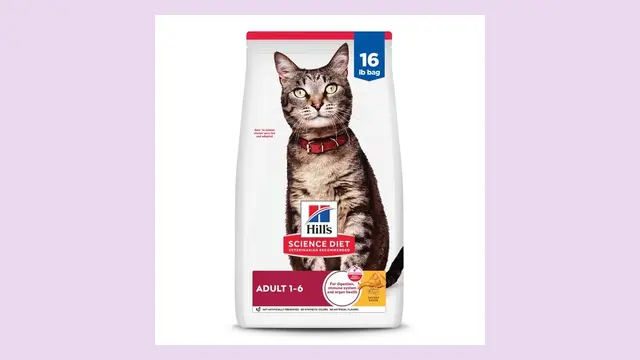
Hill's Science Diet Kitten Chicken Recipe (dry)
About $2.90 to $3.50/lb
A straightforward dry food that gets the fundamentals right for a healthy kitten. Chicken leads the recipe, the growth claim is backed by an AAFCO animal feeding trial rather than formulation alone, and Hill's publishes full nutrient and calorie data, which answers the WSAVA questions. Protein sits around 33% as fed, comfortably above the growth floor, with DHA from fish oil for brain and eye development. It is built for kittens up to about a year, so plan to move on to an adult food, or our adult cat food picks, once growth finishes.
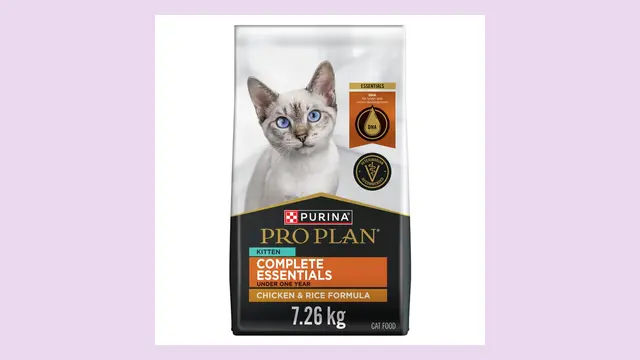
Purina Pro Plan Kitten Chicken & Rice (dry)
About $2.40 to $3.00/lb
At roughly 40% minimum protein this is the richest food on the list, which suits the tissue a kitten lays down fastest in its early months. It is formulated to the AAFCO profiles for growth and for gestation and lactation, so it also feeds a pregnant or nursing queen, and it adds DHA for developing brain and vision. The claim here is by formulation rather than a feeding trial, which is common for kitten recipes. A dense food is easy to overfeed, so portion to the pack chart and your vet rather than free-pouring.
Royal Canin Feline Kitten Instinctive Thin Slices in Gravy (wet)
About $1.10 to $1.60 per 3 oz pouch
The reason to keep pouches in the rotation is water: a wet food runs above 80% moisture and brings hydration a kitten will not drink on its own, which matters as it shifts onto solids. It is formulated complete for growth, guarantees taurine, and the soft texture in gravy tempts a kitten still learning to eat. The as-fed protein reads about 11% only because most of the pouch is water; on a dry matter basis it is high. Wet costs more per calorie and spoils once opened, so many owners pair it with a dry food, a trade-off our wet versus dry cat food guide walks through.
Royal Canin Feline Health Nutrition Mother & Babycat (dry)
About $4.00 to $5.00/lb
Made for the earliest stretch, kittens roughly one to four months old and the mother nursing them. The kibble is tiny and can be soaked into a soft gruel for a kitten just weaning off milk, and the formula is built to the AAFCO profiles for growth and reproduction, so it feeds queen and litter from one bag. Protein runs about 34% with DHA for early development. It is the priciest pick per pound and a short-season food, since a kitten graduates to a standard kitten formula by around four months.
Purina Kitten Chow Nurture (dry)
About $1.30 to $1.80/lb
The easiest bag to keep buying through a kitten's hungriest months, at roughly a third the per-pound cost of the weaning formula. Protein hits about 40% minimum, it is complete and balanced for growth, and it lists DHA for brain and vision. The recipe is less specialized than the premium picks and the maker shares less published data, a fair trade if your kitten digests it well and holds a healthy body condition. Judge it by body condition, not by how fast the bowl empties: a round belly on a kitten is normal, ribs buried under fat are not.
Reading the five kitten bags by the numbers
Here are all five in a single grid, kept in card order, so you can run your eye down the protein and price columns. One caution on the protein column: the wet pick's roughly 11% is not a weaker food, it reflects the water in the pouch, and taking that water out lifts it back among the rest. The four dry foods cluster high, about 33% to 40%, because every growth food clears the same 30% dry-matter floor. The real spread is price and role, from a budget bag near $1.30 a pound to a specialized weaning formula near $5.
| Food | Best for | Protein (min, as fed) | Form | Approx price |
|---|---|---|---|---|
| Hill's Science Diet Kitten Chicken Recipe | Overall kitten | ~33% | Dry | $2.90–$3.50/lb |
| Purina Pro Plan Kitten Chicken & Rice | Fast growth | ~40% | Dry | $2.40–$3.00/lb |
| Royal Canin Kitten Instinctive in Gravy | Best wet | ~11% | Wet | $1.10–$1.60/pouch |
| Royal Canin Mother & Babycat | Weaning, very young | ~34% | Dry | $4.00–$5.00/lb |
| Purina Kitten Chow Nurture | Budget | ~40% | Dry | $1.30–$1.80/lb |
Why a kitten eats richer than a grown cat
The gap between a kitten food and an adult one is not marketing, it is the cost of building a body. A kitten reaches most of its adult size inside the first year, and every gram of new muscle and bone has to be assembled from what is in the bowl. That is why AAFCO sets the growth protein minimum at 30% dry matter against 26% for maintenance, and why kitten formulas carry more fat and pack more calories per cup (AAFCO). An adult food is not poisonous to a kitten, it is simply too lean to keep up with the schedule.
Three nutrients do the quiet work here. Taurine keeps the heart muscle and the retina healthy, and because a cat cannot make enough on its own, a growth diet has to guarantee it (Merck Veterinary Manual). Arachidonic acid and extra arginine, both from animal tissue, cover the rest of what a cat cannot synthesize, which is the deeper reason a kitten cannot be raised on a dog's food or a plant-based one. DHA feeds the fast development of the brain, nerves, and vision through the early months, which is why it belongs on a kitten label and shows up on every pick above (Cornell Feline Health Center). A food that guarantees taurine, lists DHA, and carries a growth statement has the essentials covered.
Reading the growth-stage line on the bag
One line on the package settles whether a food is right for a kitten: the AAFCO nutritional adequacy statement, usually in small print on the back or side. It names the life stage the food is built for, and only two versions suit a kitten, complete and balanced for growth, or for all life stages (AAFCO). A food labeled for adult maintenance is not formulated for a kitten, however premium the packaging looks, so the growth-stage line, not the price or the pictures, is the thing to find first.
The same statement tells you how the maker proved the claim: by an animal feeding trial run under AAFCO procedures, or by formulation to meet the AAFCO Cat Food Nutrient Profiles. A feeding trial is the stronger evidence because real kittens ate the food and thrived, though a carefully formulated food is a reasonable choice too, especially among kitten recipes where formulation is common. After the statement, the guaranteed analysis for minimum protein and guaranteed taurine, plus DHA where it is listed, tells you the rest. The ingredient list is a weaker signal than most owners expect, which is why WSAVA points to the nutritional statement and the maker's expertise instead (WSAVA).
Feeding now, and the switch near a year
A young kitten has a small stomach and a fast metabolism, so it eats little and often: three to four meals a day is the usual start, easing to two by around six months as the stomach grows. Free-feeding dry food suits some kittens because they graze, but weigh the day's ration against the pack's chart rather than topping a bowl on sight, since a dense growth food adds weight fast; our guide to how much to feed a cat covers the amounts. A newly arrived kitten also settles better on the food it already knows, so change brands gradually, and our guide to bringing home a new kitten walks through those first days.
Most kittens move from a growth formula to an adult maintenance food around 12 months, when they reach roughly adult size, though large breeds such as the Maine Coon keep growing closer to 18 to 24 months and stay on kitten food longer to match (AAFCO). Make the change over about a week, mixing rising amounts of the new food, because cats are both finicky and prone to a stomach upset from a sudden swap. Staying on a calorie-dense kitten food past maturity tends to add weight, so the timing matters. When your kitten reaches that point our adult cat food picks take it from there, and if you are ever unsure of the timing or your kitten refuses the new food, let the veterinarian who knows it make the call.
Which bag for which kitten
Everyday healthy kitten: Hill's Science Diet Kitten Chicken Recipe, a feeding-trial-backed growth food at about 33% protein with chicken first. Fastest-growing kitten or a nursing queen: Purina Pro Plan Kitten Chicken & Rice, the richest pick here near 40% protein and formulated for growth and reproduction. Hydration and picky first eaters: Royal Canin Kitten Instinctive in gravy, a complete wet food above 80% moisture. Weaning and the first months: Royal Canin Mother & Babycat, tiny kibble that soaks into a gruel and feeds the mother too. Tight budget: Purina Kitten Chow Nurture, complete for growth at roughly a third the cost of the weaning formula. Match the growth stage to your kitten first, watch its body condition as it fills out, and let your veterinarian settle any switch or health question, including the early signs a kitten is unwell.
Kitten feeding questions, answered plainly
Not as its regular diet. A kitten is building a whole body in its first year, so it needs more protein, more fat, and more calories than a grown cat, and AAFCO sets the growth protein minimum higher, at 30% dry matter against 26% for adult maintenance (AAFCO). An adult food is not toxic, and a stolen bite will not hurt, but fed day after day it is too lean to keep up with growth. Feed a food whose label reads complete and balanced for growth, or for all life stages, until your kitten is about a year old (AAFCO).
Find the AAFCO nutritional adequacy statement, usually in small print on the back or side. For a kitten it has to read complete and balanced for growth, or for all life stages; a food labeled for adult maintenance is not formulated for a kitten, however good the front of the bag looks (AAFCO). The statement also shows the proof method, a feeding trial or formulation to the AAFCO Cat Food Nutrient Profiles. After that, check the guaranteed analysis for minimum protein and guaranteed taurine, and look for DHA. WSAVA points owners to this statement and the maker's expertise rather than the ingredient list, which it treats as a weak quality signal (WSAVA).
Young kittens do best on three to four small meals a day, easing to two around six months as the stomach grows. Start with the feeding chart on the bag, which sets amounts by age and expected adult weight, then adjust so you can feel the ribs without seeing them. Growth foods are calorie-dense on purpose, so a heavy hand adds weight quickly. Some kittens graze well on free-fed dry food, but if yours overeats, switch to measured meals. If your kitten is gaining or losing too fast, have your veterinarian set a target rather than guessing.
Most cats move from a growth formula to an adult maintenance food around 12 months, when they reach roughly adult size, though large breeds such as the Maine Coon keep growing closer to 18 to 24 months and stay on kitten food longer (AAFCO). Kitten food is more calorie- and nutrient-dense to fuel growth, so leaving a cat on it past maturity tends to add weight. Make the change a gradual transition over about a week, mixing increasing amounts of the new food, since a sudden swap can upset a cat's stomach. If your timing is uncertain or your cat refuses the new food, confirm with your veterinarian.
Both can be complete for growth, so the choice is about water, cost, and texture rather than one being better. Wet food runs above 80% moisture, which adds hydration a kitten will not drink on its own and suits a very young or teething kitten that finds soft food easier. Dry food costs less per calorie, portions cleanly, and does not spoil in the bowl for a grazer. Many owners feed both, using wet for moisture and dry for convenience. Whichever you choose, the label still has to carry a growth or all-life-stages statement (AAFCO), and any digestive trouble is worth a vet's read.