


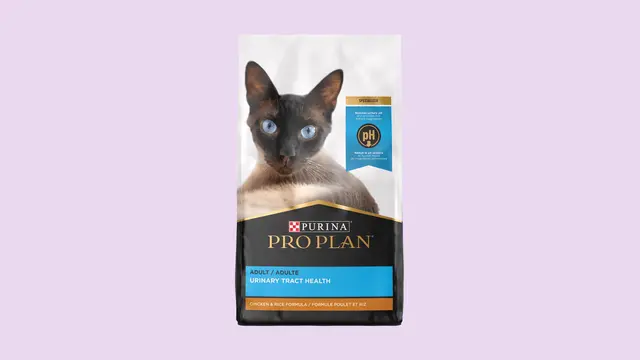
Ask ten cat owners whether wet or dry food is better and you will get ten confident answers, most of them really about one thing the argument keeps burying: water. A cat is an obligate carnivore descended from desert hunters, and it carries a famously weak thirst drive, so it tends not to drink enough at a bowl to make up for a bone-dry diet (Cornell Feline Health Center). That single trait, more than protein or price, is what separates the two food forms in a way that touches a cat's health. Everything else in the debate, cost, convenience, teeth, and how picky your cat is at dinner, sits on top of it. The parallel argument runs for dogs too, but a cat is not a small dog and the answer diverges (see wet vs dry dog food). So this guide takes the pieces one at a time until the choice stops being a matter of team can or team kibble.
Start with the number the whole thing pivots on. Dry food carries roughly 6 to 10 percent water and canned food at least 75 percent, often nearer 78, with semi-moist pouches around 35 percent in between (Cornell Feline Health Center). Keep that gap in your pocket, because it drives the hydration case, the calorie math, the price per meal, and even why a wet food's label makes it look lower in protein than it really is. One thing it does not change: whichever form wins for your cat, it has to be a complete and balanced diet for the right life stage first, which is the whole point of our best cat food for 2026 roundup.
Where canned food pulls ahead
About three quarters of a can is water, and for a cat that quietly rewrites the hydration math. Because cats drink so little on their own, a wet meal delivers moisture the way prey once did, which produces more dilute urine (Cornell Feline Health Center). That matters most for the lower urinary tract. Increasing water intake is a cornerstone of managing feline lower urinary tract disease, and the AVMA lists adequate hydration among the ways to support a cat prone to it (AVMA). Veterinary research on cats with recurrent feline idiopathic cystitis, the most common form, has linked a moisture-rich canned diet to noticeably fewer flare-ups than the same nutrition fed dry. If your cat is straining, going outside the box, or urinating more often, that is a vet visit, not a food swap; our guides on why a cat avoids the litter box and the signs your cat is sick cover the warnings worth acting on.
There is a second, quieter win. The stronger aroma and soft texture of canned food tempt the eaters who make mealtimes hard: a fussy adult, a kitten learning to eat, a senior who needs coaxing, or a cat with sore or missing teeth. Two honest limits balance that out. A healthy cat that already drinks well gets no special bonus from the water in a can, since the body balances intake either way, so the hydration benefit is real but aimed at the cats who need it. And an open can runs on a clock: refrigerate the rest and use it within a couple of days, and lift the bowl after about 20 to 30 minutes rather than letting a warm portion sit and spoil.
- High moisture, at least 75 percent, adds the water a low-thirst cat rarely drinks on its own (Cornell)
- Produces more dilute urine, useful for cats prone to lower urinary tract disease (AVMA)
- Strong aroma and soft texture win over fussy eaters, kittens, and seniors
- Easier to eat for a cat with dental pain or missing teeth
- Lower calorie density means a bigger, more filling portion for the same calories
- Costs more per calorie, since much of the can is water (AAFCO)
- Spoils once served, so the bowl gets cleared after about 20 to 30 minutes
- Opened cans need refrigeration and get used within a couple of days
- Does not suit free-choice grazing or puzzle feeders
- No plain canned food carries a proven dental benefit
What dry food gets right
Kibble stays popular for practical reasons that owe nothing to marketing. It is calorie dense, so a small volume goes a long way and the cost per calorie stays low. Sealed and stored well it keeps for weeks, it does not spoil if a cat grazes across the day, and it works in puzzle feeders and slow bowls that a can cannot fill, which fits the slow, all-day nibbling many cats prefer. For a multi-cat home or anyone feeding on a budget, those edges add up. A complete dry food carries the same AAFCO backing as a complete canned one, so this is not a quality gap, it is a difference in water and habits (AAFCO).
Then there is the old promise that crunchy kibble scrubs a cat's teeth clean. It does not hold up. Most kibble shatters on the first bite, and cats often swallow the pieces nearly whole instead of chewing, so there is little abrasion where plaque actually collects, down at the gum line. The narrow exception is worth knowing: specially shaped dental diets and treats that carry the Veterinary Oral Health Council seal have passed clinical testing for controlling plaque or tartar (VOHC). The seal, not the word crunchy on the front of the bag, is the thing to look for, and daily brushing is still the standard for a cat's mouth.
A cat that gulps its kibble gets no scrubbing from it. Only a VOHC-sealed dental food has been tested to earn that claim.
- Lowest cost per calorie of the common forms
- Calorie dense, so portions and storage stay compact
- Safe to leave out for the all-day grazing many cats prefer
- Keeps for weeks when sealed and stored properly
- Works in puzzle feeders and slow bowls that pace a fast eater
- Adds very little water, so it leans on the cat drinking enough (Cornell)
- Plain kibble does not clean teeth, and cats often swallow it whole
- Only VOHC-sealed dental diets have proven plaque or tartar claims (VOHC)
- A lower-moisture profile is a poorer fit for urinary-prone cats (AVMA)
- Less tempting for picky eaters and harder for a cat with sore teeth
Canned and dry, factor by factor
Here are the same trade-offs in one grid, so the factors read across at a glance. One caution before you compare protein: you cannot line a canned food's guaranteed-analysis percentage up against a dry food's, because the water in the can drags the as-fed number down. On a dry matter basis, once you take the water back out, many canned foods are actually higher in protein than they look.
| Decision factor | Canned (wet) | Dry (kibble) |
|---|---|---|
| Moisture content | At least 75%, often ~78% (Cornell) | About 6 to 10% (Cornell) |
| Calorie density by weight | Lower, most of the can is water | Higher, the dense option |
| Cost per calorie | Higher, the water adds weight and packaging (AAFCO) | Lower, the budget choice |
| Hydration help | Meaningful, especially for urinary-prone cats (AVMA) | Minimal, relies on the water bowl (Cornell) |
| Dental benefit | None proven for plain canned food | None for plain kibble; only VOHC-sealed diets proven (VOHC) |
| Grazing and storage | Refrigerate, use within ~2 days; clear bowl after ~20–30 min | Leave out for all-day grazing; keeps weeks if sealed |
| Palatability | Strong aroma and soft texture win fussy eaters | Convenient for free-choice feeders and crunch-lovers |
Doing the cost math by the calorie
Cost is the easiest of these to settle. Per calorie, canned food costs more than kibble for a plain reason: most of a can is water, and water is heavy to package and move, so you spend more to deliver the same energy (AAFCO). The gap is smaller for a cat than for a large dog, because cats eat little, but a canned-only diet still runs a higher monthly bill than kibble. Rather than trust a number I make up, run your own: take the calories per can or per cup off the label, divide the package price by total calories, and compare cost per 100 calories across the two forms. That one calculation, on your brands at your store, tells you more than any review. If portion size is the part you are unsure about, our guide to how much to feed your cat walks the calorie math step by step.
This is where feeding both earns its place. Plenty of owners use dry as the calorie base for cost and free-choice grazing, then add a can, or part of one, for the water and the appeal, counting all of it toward the day's calories so the cat does not creep over its ideal weight. With about 61 percent of US cats already overweight or obese (APOP, 2024 survey), that last part is not a footnote. A topper is not free calories, so trim the kibble when you add the can. One compliance note before you shop: any dollar figure here would be a guess, so confirm the current price on the retailer's own page, and let your veterinarian, not a claim on the packaging, set any therapeutic urinary or kidney diet.
A fit-by-situation answer
Once you separate the questions, the answer follows the cat, not a slogan, and water is the thread running through it. A cat with any history of urinary trouble or early kidney disease leans toward wet food, or a vet-set therapeutic diet, because the extra moisture does real work (AVMA); that medical call belongs to your veterinarian, not a label. A kitten, a fussy eater, a senior who needs coaxing, or a cat with dental pain also does better with the aroma and soft texture of a can. A healthy adult that drinks well and likes to graze can thrive on a complete dry food with fresh water always in reach, which is why Cornell says that once a food is complete and balanced, the form can come down to what your cat prefers (Cornell Feline Health Center). For most households the practical middle is a dry base for cost and grazing plus a daily can for moisture, all counted toward the calorie target. Whatever ends up in the bowl, dental care sits outside this whole debate: brushing and a VOHC-sealed product do more for a cat's teeth than the wet-or-dry decision ever will. The bowl should fit the cat and the teeth should get their own plan, and that, in short, is where PawProof comes down on the whole debate.
Common questions from cat owners
For urinary health, the edge goes to wet food, and the reason is water rather than any special ingredient. Canned food runs at least 75 percent moisture against roughly 6 to 10 percent for kibble, so it passively adds water and produces more dilute urine, which is generally less hospitable to crystals and plugs (Cornell Feline Health Center). The AVMA lists adequate hydration among the ways to manage feline lower urinary tract disease (AVMA), and research links a moisture-rich diet to fewer recurrences of feline idiopathic cystitis. A healthy cat with no urinary history does fine on complete dry food plus a reliable water source. If your cat has had a blockage or diagnosed crystals, the diet is a veterinary decision, because it depends on the crystal type.
A cat does not strictly need wet food to be healthy, as long as it eats a complete and balanced diet and drinks enough water. What canned food does is make adequate water intake easier for an animal built to get most of its moisture from prey (Cornell Feline Health Center). Because cats have a low thirst drive, many do not fully compensate at the bowl for a dry-only diet, which is why owners of urinary-prone cats are often steered toward more wet food. For a healthy cat that drinks well, quality dry food with fresh water always available is a reasonable choice. Many owners split the difference and feed both.
No, not ordinary kibble. Most dry food shatters on the first bite, and cats tend to swallow the pieces nearly whole rather than chew, so there is little of the abrasion that would matter at the gum line where plaque forms. The exception is specific dental diets and treats carrying the Veterinary Oral Health Council seal, which have passed clinical testing for controlling plaque or tartar (VOHC). The seal is the claim that has been tested, not the word crunchy on the bag. For everyday prevention, daily toothbrushing remains the standard for a cat's mouth.
Yes, and it is a common, sensible setup for cats. A dry base keeps cost per calorie down and suits the all-day grazing many cats like, while a can or part of one adds moisture and appeal. The one rule is to count everything toward the daily calorie target so the topper does not cause slow weight gain, which matters when roughly 61 percent of US cats are already overweight or obese (APOP, 2024 survey). Use the calorie figures on each label and trim the kibble portion when you add wet. If your cat has a urinary or kidney condition, ask your vet how to balance the two.
Because the guaranteed analysis is printed on an as-fed basis, which includes water, so the high moisture in canned food drags the listed percentages down (AAFCO). To compare fairly, convert both foods to a dry matter basis: subtract the moisture percentage from 100 to get the dry matter, then divide each nutrient by that figure and multiply by 100 (AAFCO). Done that way, many canned foods are actually higher in protein than the front-of-can number suggests. The same water gap is why you should never compare a canned food's calories per kilogram directly against a dry food's.