


Roughly a quarter of dogs develop osteoarthritis in their lifetime, and the risk climbs with age and body size, so for a big or stiff dog a supportive bed is closer to basic comfort than a splurge (ACVS). The shopping is the hard part. Orthopedic is a marketing word with no set standard for dog beds, so a thin polyester pillow can wear the same tag as a genuinely supportive block of foam sitting beside it at the same price. What separates the two is the fill and how firm it stays under the dog, never the label on the box.
This guide sorts differently from a general roundup. Our wider best dog beds guide weighs sleep style, chew resistance, and budget for every dog. Here the ranking is tuned for arthritic and large-breed dogs, and it turns on one thing: the fill. Solid support foam, contouring memory foam, bumpy egg-crate, and bolstered shapes each do a distinct job for a sore joint, and picking the wrong one is how an old dog ends up back on the tile. Below, five beds ranked by the support their fill really delivers, then the firmness and sizing rules that decide which one fits your dog.
Each bed had to earn its place on the things a sore joint feels. Fill that resists bottoming out: enough dense, thick foam that a heavy dog does not compress it to the floor, where the pressure lands right back on the joint (AKC). Evidence where it exists: the one pick with published clinical data behind its joint claims came from a University of Pennsylvania study, and we say so plainly rather than dressing every bed in science. Easy entry: a tall wall a stiff dog has to climb can be enough to send it back to the floor (PetMD). And an honest, washable cover, because seniors leak and a bed you cannot clean is a bed you stop using. Every pick names a real product with current manufacturer specs and no invented numbers, at rough US retail for mid-2026. That refusal to invent a number is the standard the PawProof gear desk holds every bed to, because your dog sleeps on this choice for years.
Five beds ranked by real support
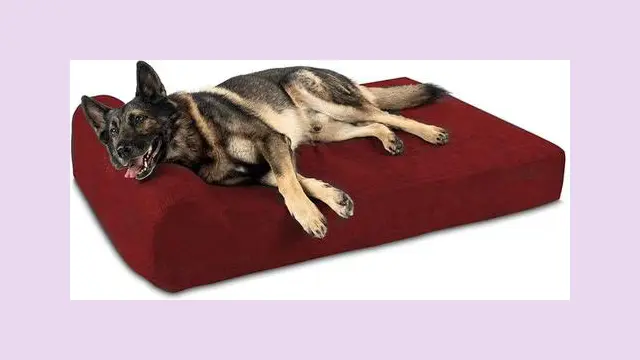
Big Barker 7" Orthopedic
About $250 to $500
The reason this leads is evidence, which almost no dog bed can offer. Researchers at the University of Pennsylvania studied large dogs with diagnosed osteoarthritis sleeping on the 7-inch Big Barker and reported meaningful gains in how the dogs moved, rested, and handled everyday activities across the trial (University of Pennsylvania). The bed itself is three stacked layers of firm support foam a full seven inches deep, so a heavy dog settles onto it without pressing through to the boards. Price and floor space are the real costs, which is why it earns its keep on a large or giant breed rather than a small dog that never needed that much foam underneath.

PetFusion Ultimate Lounge
About $90 to $220
A dog who sleeps propped against an edge, a hip or a head resting on a raised side, does better with a bolster than a flat pad. This one is built on a single slab of gel-infused memory foam rather than loose fill, ringed by a firm bolster, and it sits on a waterproof liner beneath a machine-washable cover, which is a real advantage with an incontinent senior. Memory foam warms and molds around bony points, spreading pressure, so it feels softer than Big Barker's firm support. That makes it a stronger match for a medium dog with early stiffness than for a hundred-pound arthritic dog that needs a firmer base. The rim also trims usable surface, so a dog who stretches out flat may prefer an open mat.
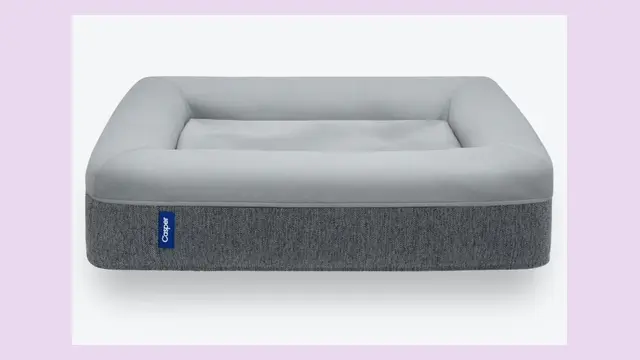
The Dog's Bed Orthopedic
About $60 to $160
For real orthopedic support without the top-tier price, the detail to chase is a single piece of orthopedic memory foam rather than shredded or chopped fill, and this line carries it across a wide range of sizes and firmness options. Solid-core foam is what matters: it supports evenly and keeps its shape, instead of migrating into lumps and dead spots the way loose fill does after a few months of a big dog flopping down on it. A waterproof inner cover and a washable outer keep it serviceable. The honest limits are heat, since memory foam runs warm and a dog who overheats may dislike it, and durability, since the plush outer is not built for a determined chewer.
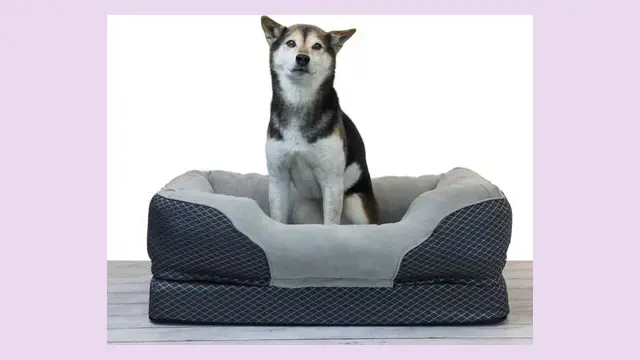
Furhaven Orthopedic
About $30 to $95
Egg-crate is the bumpy, convoluted foam you find in the cheaper orthopedic beds, and Furhaven's sofas are the reliable budget version. The ridges spread pressure and let air move, which is genuinely comfortable, but be clear about what egg-crate is: comfort foam, not deep support. It compresses faster and thinner than a solid slab, so a large or heavy arthritic dog will bottom out through it onto the floor. Where it fits is a younger or lighter dog, a dog with mild stiffness, or a second bed for another room that goes through the wash without a second thought. Keep it for the lighter dog and the guest corner, where deep joint support is not the point.
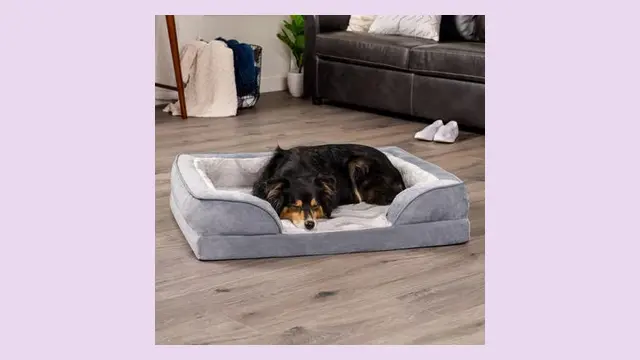
Low-profile firm foam mat
About $40 to $130
A firm mat you can step onto solves a problem the fancier beds create: a stiff dog that cannot heave itself over a tall rim will often give up and lie on the floor instead (PetMD). A flat, high-density foam mat with no sides, or one with a single dipped front, lets the dog walk straight on. Dense firm foam also delivers more support per inch than soft memory foam, and a slim mat tucks into a crate or slides beside the couch. Brindle and Dogbed4Less make open orthopedic versions with washable covers. The trade-off is no rim to lean against, so this is support for a struggling joint, not a nest for a dog who likes to burrow.
| Bed | Fill type | Feel | Best for | Approx price |
|---|---|---|---|---|
| Big Barker 7" Orthopedic | Solid support foam | Firm | Large arthritic seniors | $250–$500 |
| PetFusion Ultimate Lounge | Gel memory foam + bolster | Medium-soft | Head-resters, early stiffness | $90–$220 |
| The Dog's Bed Orthopedic | Solid memory foam | Medium | All-round adults | $60–$160 |
| Furhaven Orthopedic | Egg-crate (convoluted) | Soft, cushioning | Lighter, younger dogs | $30–$95 |
| Low-profile firm foam mat | Firm high-density, no wall | Firm | Very stiff seniors | $40–$130 |
What "orthopedic" really means past the label
Because no rule governs the word, what earns the name in practice is a fill that resists bottoming out under the dog's weight and spreads load off the hips, elbows, and shoulders. Two things decide that: the type of foam and its thickness relative to the dog. Solid support foam is firm and load-bearing. Memory foam contours and distributes pressure, feels softer, and runs warm. Egg-crate, the convoluted sheet, cushions and helps airflow but is shallow. Loose or shredded fill is soft and cheap, yet it migrates into lumps and offers little joint support, so a bed advertised as memory foam that turns out to be a thin topper over polyester filler is not doing what a big arthritic dog needs.
For a large or arthritic dog, firmness and thickness matter more than plushness, because a soft bed that squashes to the floor puts the pressure straight back onto sore joints. The University of Pennsylvania work used a firm, thick support bed for exactly that reason (University of Pennsylvania). But firm is not always the goal. A small dog, a bony senior prone to pressure calluses, or a dog recovering from surgery often does better on a softer, contouring memory-foam surface that offloads the pointy bits. A bed is comfort care, not treatment: osteoarthritis itself is managed by your veterinarian with weight control, pain medication, and sometimes physical therapy (ACVS), and a supportive bed sits alongside that plan rather than replacing any part of it. Our senior dog care guide covers the wider picture of keeping an aging dog comfortable.
One lever a mattress cannot pull is weight, and it is the biggest one. Keeping a dog lean takes more load off arthritic joints than any foam, so the food bowl does as much work as the bed. If your dog is carrying extra pounds, talk to your vet about body condition and see our guides on senior dog food and how much to feed your dog, then let the bed handle the hours your dog spends lying down.
Firmness and size, matched to the dog
Size the bed before you judge the foam, because the best core is wasted if the footprint is wrong. Let your dog stretch out flat on his side and measure from the nose to the base of the tail, then leave a hand's width of clearance at each end so nothing hangs off. Body weight, not length, sets how dense and deep the foam has to be: two dogs the same length can need very different beds if one outweighs the other, and the heavier one will crush a thin, soft pad down to the floor (AKC). A 2-inch pad under a ninety-pound dog is the most common orthopedic letdown. Caught between two sizes, or shopping for a dog who sprawls, go up.
Then firmness by body. A big, heavy, or clearly arthritic dog wants firm, thick support foam. A medium dog with early stiffness who likes to prop a head does well on contouring memory foam with a bolster. A bony or post-surgical dog is often more comfortable on softer memory foam that offloads pressure points, with a low entry it does not have to climb (PetMD). On cleaning, plan for the senior reality up front: most quality beds give you a zip-off, machine-washable cover while the foam core is spot-cleaned rather than soaked, so read the care label before the first wash. A dog who leaks needs a waterproof liner under that cover, and a second cover on hand keeps the bed usable on laundry day. And if a dog suddenly refuses to lie down or struggles to rise, that is pain worth a visit, not just a bedding problem, so check the signs your dog is sick.
The five, read back to your dog
Work from your dog's size and joints, not the badge on the box. A large or diagnosed-arthritic dog is safest on the Big Barker 7" Orthopedic, the one pick with a published university study behind its joint claims and firm enough that a heavy dog will not press through it. A medium dog with early stiffness who likes to rest a chin belongs on the PetFusion Ultimate Lounge. For solid orthopedic foam at a fairer price, The Dog's Bed Orthopedic holds its shape where loose fill would clump. A lighter or younger dog, or a spare for a second room, is well covered by the Furhaven egg-crate, as long as you know it cushions rather than deeply supports. And a dog too stiff to climb a rim wants the low-profile firm foam mat it can step straight onto. Whatever you choose, the bed is one half of the job: a lean weight and a vet's plan for the pain do the rest.
Questions achy-dog owners ask
They help comfort, they do not treat the disease. A firm, thick support surface keeps a heavy dog off the hard floor and off the joints that hurt, and University of Pennsylvania researchers found that large arthritic dogs moved and rested better after switching to a deep orthopedic bed (University of Pennsylvania). Osteoarthritis itself is still managed medically, with weight control, pain medication, and sometimes physical therapy your veterinarian prescribes (ACVS). Treat a good bed as supportive care beside that plan, never as a substitute for any of it.
It depends on size and build. A big, heavy, or clearly arthritic dog needs firm, thick support foam that will not compress to the floor. A smaller, bonier, or post-surgical dog is often more comfortable on softer memory foam that contours around pressure points and offloads the bony bits. Memory foam also traps more heat, so a dog who runs warm or seeks out cool tile may dislike it. Match the feel to the individual dog rather than to whichever word the marketing leans on hardest.
Usually not on its own. Egg-crate, the convoluted bumpy foam, cushions well and helps airflow, but it is comfort foam that compresses faster and thinner than a solid support slab, so a large or arthritic dog bottoms out through it and lands back on the pressure a bed is meant to relieve. It is a fine choice for a lighter or younger dog, a dog with mild stiffness, or a low-cost spare bed. For a heavy senior, choose a thick solid support core or dense memory foam instead.
Scale it to the dog. Lighter dogs do fine on a few inches of good foam, while large and giant breeds want a thick, dense support core so they do not sink to the floor; the clinical bed in the Penn study used seven inches for exactly that reason (AKC). Do not judge by the word orthopedic, which has no set standard, and do not judge by loft alone, since a tall pile of soft loose fill compresses to nothing. Read the spec sheet for the actual foam type and thickness before you buy.
Put the bed where your dog already chooses to sleep, keep the entry low so a stiff dog can step on rather than climb in, and give it a few days before deciding it failed (PetMD). For cleaning, most beds give you a removable, machine-washable cover while the foam core is spot-cleaned, so check the label rather than soaking the whole thing. For a leaky senior, add a waterproof liner and keep a second cover on hand, so laundry day never leaves the bed unusable.