


An older dog's body changes in ways a bag of food cannot advertise around. Muscle gets harder to hold, the day's calorie burn drops, joints stiffen, and the kidneys quietly do a little less. The marketing answer to all of that is one word printed large on the front, "senior," and that word carries less weight than most owners assume. This guide is a synthesis of veterinary and regulatory sources, not medical advice, and its argument is short: a good senior food is judged by its AAFCO adequacy statement and how well it suits the dog in front of you, not by the label on the front of the bag. Every figure here is a mid-2026 estimate, so confirm the number on the actual package and settle any health question with the veterinarian who can examine your dog.
The most stubborn belief about old dogs is that they need less protein. For a healthy senior the opposite is closer to the truth, and it is worth clearing up before you compare a single bag, because it changes what "good" even means on this shelf. Old age is a life stage, not an illness, and feeding for it means matching the food to the body's real shifts rather than to a worry that has aged out of the science.
Three screens, in order. First, the label has to carry an AAFCO adult-maintenance statement, because there is no separate "senior" nutrient profile to certify against, only the adult-dog minimums (Tufts). Second, the recipe should keep protein generous and high in quality rather than trimming it, since muscle loss is the larger threat to most old dogs. Third, the maker should pass the WSAVA questions: a qualified nutritionist on staff, control of its own manufacturing, and willingness to share full nutrient and calorie data on request (WSAVA). Numbers below come off current labels and are mid-2026 estimates. Treat the list as a starting point, then let the veterinarian who knows your dog's kidneys, heart, and weight make the deciding call. We would rather send you back to that label and your vet than let a marketing word on the front of the bag choose your dog's dinner.
What actually changes in an aging dog
Two things move in opposite directions as a dog ages, and a senior food has to respect both. A dog's maintenance energy requirement generally falls over its lifetime, partly from lost muscle and a slower routine, so many older dogs need fewer calories and a bit more fiber to hold a healthy body condition (AAHA). At the same time the body starts shedding lean muscle, a process called sarcopenia that runs independent of any disease. Those two facts pull against each other: fewer calories, but not less of the nutrient that defends muscle.
That nutrient is protein, and the current veterinary read is that older dogs need it kept up, not cut back. The AAHA 2023 senior care guidelines note that senior pets may need up to 50 percent more protein to slow muscle loss, and that a senior dog's diet may include mild increases in protein content and quality to offset the loss of lean body mass (AAHA). So the food that suits an old dog is often lighter on calories and steady or higher on quality protein, which is close to the reverse of the old "senior means low protein" formula.
There is also no birthday that flips the switch. Veterinarians generally treat the last quarter of a dog's expected lifespan as its senior stage (AAHA), which lands very differently by size. A small terrier may not be old until 10 or 11, a medium breed around 8 or 9, and a large or giant breed can be a senior by 6 or 7. Watch weight, muscle, and energy rather than the calendar, and if you want the wider picture beyond the bowl, our senior dog care guide covers the checkups and routine that go with the diet.
The low-protein myth, and where restriction belongs
The advice to strip protein out of an old dog's bowl came from an honest but dated worry: that dietary protein wears out aging kidneys. Decades of study have not borne that out for healthy dogs. Part of the confusion is history, because the early foods that seemed to prove the point leaned on low-quality, hard-to-digest protein, and the sensible fix was better protein, not less of it (AAHA). In a healthy senior, cutting protein tends to speed up the very muscle wasting you are trying to prevent, which leaves a dog weaker and less able to recover from illness.
Protein restriction earns a real place in one situation, a dog with diagnosed kidney disease, and even then the target is phosphorus and protein quality managed through a therapeutic diet a veterinarian prescribes, not a guess made in the pet aisle. The line to hold onto is this: healthy old age calls for enough good protein, while a diagnosed disease calls for a specific therapeutic plan. If your older dog is drinking or urinating more, dropping weight, or losing its appetite, those can be early warnings worth a prompt visit, and our guide to the signs your dog is sick lays out which ones not to wait on.
Five senior foods, matched to the aging body
Five foods, five different jobs. Each card carries three real figures pulled off the current label or maker page, the kind you can hold against the bag in your hand. Protein and fat are guaranteed-analysis minimums, calories are kcal per cup where the maker publishes them, and the per-pound or per-can prices are mid-2026 US retail estimates that keep moving. This is the deeper cut on age; the broader life-stage rundown lives in our best dog food picks. The order below is by job, not a quality ladder, so read across to the dog you actually own.
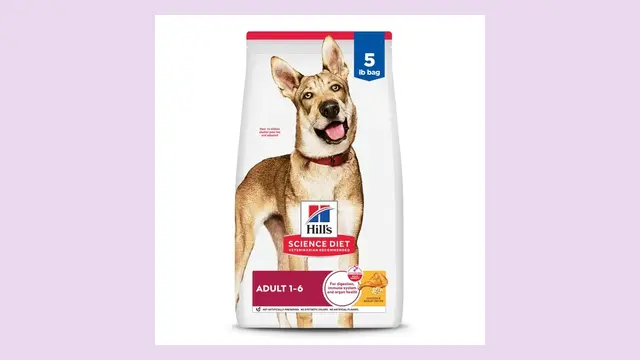
Purina Pro Plan Adult 7+ Complete Essentials Chicken & Rice
About $2.10 to $2.60/lb
This is the pick that reflects where the science actually landed: chicken leads, protein runs around 29 percent minimum, well above a bare adult floor, and the adult-maintenance claim is backed by an AAFCO feeding trial rather than formulation alone. Purina publishes full nutrient and calorie data, which clears the WSAVA questions. Built for dogs 7 and older, it keeps protein up to defend muscle instead of trimming it on age alone. A dog with diagnosed kidney disease is the exception, and that is a diet your vet should set.

Eukanuba Senior Medium Breed Chicken
About $2.20 to $2.70/lb
Aimed at the older dog that has started to slow on the stairs, with chicken first, protein around 25 percent, and added EPA and DHA plus glucosamine and chondroitin for joint support. Omega-3 EPA has the strongest evidence of the common joint nutrients, so seeing it on the panel is a genuine plus. The honest catch is dose: the amount baked into a regular food usually sits below the therapeutic level, so a dog with diagnosed arthritis often needs a vet-directed fish oil on top of the bag.

Hill's Science Diet Adult 7+ Chicken Meal, Barley & Rice
About $2.60 to $3.10/lb
Built for dogs 7 and up, with a leaner profile, protein near 18.7 percent and fat around 13.5 percent, and lower calorie density to help a slowing, overweight dog hold a sensible weight. It is the one bag here that sits at the low end of protein, which is exactly why it fits a couch-dog carrying extra pounds and not a lean senior already losing muscle. The claim is feeding-trial backed. Choose it by body condition, not by age, and step up the protein if your dog is thin.

Purina Pro Plan Adult 7+ Classic Chicken Entrée (wet)
About $2.80 to $3.60 per 13 oz can
A can earns its place when an old dog has sore teeth, a fading appetite, or needs more water in the day, and this one runs about 78 percent moisture with chicken leading and a soft texture that tempts a picky senior. The as-fed protein reads low near 9 percent only because most of the can is water; on a dry-matter basis it is high. It costs more per calorie than kibble, so many owners use it as a topper, and our look at how the two forms compare walks through when each makes sense.
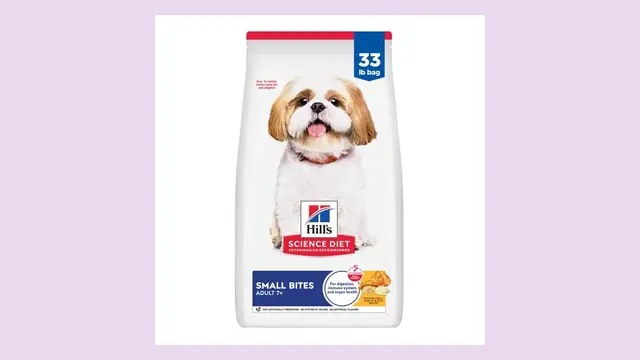
Purina ONE +Plus Vibrant Maturity Adult 7+ Chicken
About $1.60 to $2.00/lb
Proof that a complete-and-balanced senior bag does not have to cost a premium. Real chicken leads, protein holds around 28 percent minimum, it adds glucosamine, and it runs roughly 409 kcal per cup, all for about half the per-pound cost of the joint and overall picks. It is the easiest food here to keep buying month after month for a healthy older dog. The trade-off against the pricier bags is a less specialized recipe, which is a fair deal if your dog does well on it.
The senior bags, protein against price
All five bags sit in one grid below, in the same order as the cards, so the protein and price columns line up for a quick scan. One caution before you compare: the wet pick's protein looks low at about 9 percent only because roughly 78 percent of the can is water, so it does not belong in a straight line against the dry foods. Among the four dry bags the real spread is intent, from a leaner weight-control food near 18.7 percent up to a muscle-minded 29 percent, which is a difference in the job each does, not a quality ranking.
| Food | Best for | Protein (min) | Notable | Approx price |
|---|---|---|---|---|
| Purina Pro Plan Adult 7+ Complete Essentials | Overall | 29% | Feeding-trial tested | $2.10–$2.60/lb |
| Eukanuba Senior Medium Breed Chicken | Stiff joints | ~25% | EPA/DHA + glucosamine | $2.20–$2.70/lb |
| Hill's Science Diet Adult 7+ Chicken Meal | Sedentary, overweight | ~18.7% | Leaner calories | $2.60–$3.10/lb |
| Pro Plan Adult 7+ Classic Chicken Entrée | Wet, poor appetite | ~9% (as fed) | 78% moisture | $2.80–$3.60/can |
| Purina ONE +Plus Vibrant Maturity 7+ | Budget | 28% | Glucosamine, ~409 kcal/cup | $1.60–$2.00/lb |
Joints, kidneys, and what a diet cannot fix
Food does real work for an old dog, but some of what owners hope a "senior" bag will handle sits outside it. Joints are the clearest example. The most useful diet steps for canine arthritis are keeping the dog lean, adding therapeutic-dose omega-3 fatty acids (EPA in particular), and treating glucosamine and chondroitin as optional support with weaker evidence (AAHA). Two things matter in practice: the omega-3 in a regular food is usually below the dose that moves arthritis, so a diagnosed dog needs a vet-directed supplement, and results take about two months to show. A supportive place to sleep helps as much as the bowl, which is why we keep a separate list of the best orthopedic dog beds.
Kidneys are the other place a bag reaches its limit. Chronic kidney disease is common in older dogs, and a dog that has it is usually moved to a therapeutic renal diet that lowers phosphorus, provides a moderate amount of high-quality protein, and often adds omega-3, prescribed and monitored by a veterinarian. That is the one setting where protein comes down, and it is a medical decision, not a shelf choice. For a healthy senior the job is simpler: feed the right amount of a food that suits the dog and keep the body condition lean, which is where feeding by calories and body score rather than by the scoop pays off, laid out in how much to feed your dog. When you do change foods, move over 7 to 10 days to spare an older gut a sudden swap.
Matching a bag to your older dog
- The lean senior losing muscle: Purina Pro Plan Adult 7+ Complete Essentials, chicken-led and feeding-trial tested at about 29 percent protein, the pick that keeps protein where an aging body wants it.
- The dog stiffening on the stairs: Eukanuba Senior Medium Breed, with EPA, DHA, and glucosamine on the panel, paired with a vet-directed fish oil if arthritis is diagnosed.
- The overweight couch-dog: Hill's Science Diet Adult 7+ Chicken Meal, leaner and lower in calories, chosen for a heavy, slowing dog and stepped up if your dog is thin.
- The picky eater or sore mouth: Pro Plan Adult 7+ Classic Chicken Entrée, about 78 percent moisture for hydration and appetite, useful as a whole meal or a topper.
- The healthy senior on a budget: Purina ONE +Plus Vibrant Maturity 7+, chicken-first and complete for adult maintenance at roughly $1.60 to $2.00 a pound.
Read the whole shelf this way and the pattern holds: match the food to your dog's weight, muscle, and any diagnosis first, keep protein generous unless a vet has a reason to lower it, and let the adequacy statement outrank the marketing. The bag can support an old dog well. The decision that it fits still belongs to you and the veterinarian who can put hands on the dog.
Owner questions on feeding an older dog
For a healthy older dog, no, and often the reverse. Aging dogs lose lean muscle, a process called sarcopenia, and adequate high-quality protein is the main way to slow it. The AAHA 2023 senior care guidelines note that senior pets may need up to 50 percent more protein, and that a senior dog's diet may include mild increases in protein content and quality to offset lean body mass loss (AAHA). Cutting protein in a healthy senior tends to speed up the muscle wasting you are trying to prevent. The old "less protein to spare the kidneys" advice applies to dogs with diagnosed kidney disease, not to healthy old dogs.
Correct. AAFCO recognizes two nutrient profiles, growth (including reproduction) and adult maintenance, with no separate category for senior, mature, or geriatric dogs (AAFCO). A food sold as "senior" is legally an adult-maintenance food, so it only has to meet the adult minimums (Tufts). That is why senior foods vary so widely: a Tufts review found calories in senior diets ranging from about 246 to 408 per cup, and protein spread across a broad band, which means two bags labeled the same way can be built very differently (Tufts). Read the adequacy statement and the guaranteed analysis, not the word on the front.
There is no single age. Veterinarians generally count the last quarter of a dog's expected lifespan as its senior stage (AAHA), and because lifespan tracks size, the timing swings a lot. A small breed may not be senior until about 10 or 11, a medium breed around 8 or 9, and a large or giant breed as early as 6 or 7. Body condition and health matter more than the birthday, so watch weight, muscle, and energy rather than switching foods the moment a number is reached. If you are unsure where your dog sits, your vet can place it on that curve.
That is a veterinary decision, not a shelf choice. A dog with diagnosed chronic kidney disease is usually moved to a therapeutic renal diet that lowers phosphorus, provides a moderate amount of high-quality protein, and often adds omega-3 fatty acids, all prescribed and monitored by your vet. Do not restrict protein on your own hoping to protect the kidneys, because in a dog without kidney disease that mostly costs muscle. If your older dog is drinking or urinating more, losing weight, or off its food, those can be early kidney signs worth a prompt visit rather than a diet you improvise.
Some help, with caveats. Omega-3 fatty acids, especially EPA, have the strongest evidence among the common joint nutrients and can reduce arthritis signs in dogs, though it takes roughly two months to see an effect (AAHA). Glucosamine and chondroitin are low-risk but rest on weaker, mixed evidence. The bigger catch is dose, since the amount built into a regular senior food is often below the therapeutic level, so a dog with diagnosed arthritis usually needs a vet-directed supplement on top. The most effective diet step of all is simpler and free: keep the dog lean, and give it a supportive place to sleep.